Energy

Energy was re-launched as an official theme of the Green-Schools programme, with the support of EirGrid, in January 2025. Since the re-launch, the Energy theme now occurs as the fourth theme sequentially for participating schools. following on from the Travel theme. This theme looks to encourage schools to learn about energy in Ireland, how it's made, and how it gets to the school. We also look at how to reduce energy consumption and raise awareness of climate change issues.
Sustainable Development Goals

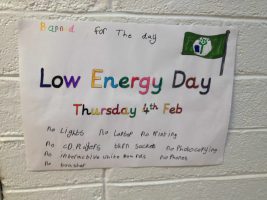
85% of schools getting their Energy flag in 2026 carried out a 'Switch Off' campaign, which reduced their energy usage by an average of 10%.

Find out more about this theme, upcoming events and competitions, and theme resource clicking on the button below.

What is Energy?

Science defines energy as the ability to do work.

Energy Sources 

We get the energy we use on a daily basis from different sources. They are divided into two main groups – renewable (an energy source that we can use over and over again) and non-renewable (an energy source that once used up cannot be replaced in a short period of time). 

Non-renewable Energy  

Most of the energy we use comes from fossil fuels such as gas, oil, peat, coal and petrol. This energy is used every day in homes, businesses, schools and for travel. Millions of years ago energy from the sun was absorbed by plants, some of which were eaten by animals. When the animals and plants died, they were covered with mud and waste and became part of the earth’s crust. For millions of years, they were squeezed together and heated from the centre of the earth until they turned into the fossil fuels that we use today. Crude oil (petroleum) is a naturally liquid fossil fuel, natural gas and propane are normally gases, and coal is a solid. Coal, oil, natural gas, and propane are all considered fossil fuels. Peat, a ‘young’ fossil fuel that takes several thousand years to mature, is also an important non-renewable energy source in Ireland. We turn some of these fuels into electricity to light and heat buildings and to heat water. A lot of appliances in our homes need electricity to work. 

Burning fossil fuels produces carbon dioxide. Carbon dioxide is one of the greenhouse gases which are causing climate change. Greenhouse gases cause the earth to heat up by trapping the sun’s heat in the earth’s atmosphere. Climate change is causing the earth to become warmer. 

Facts & Figures

What You Can Do

Useful Links

Green-Schools Energy School of the Year Awards 2026

This year saw our very first Green Schools Energy school of the year awards. We came together in Portlaoise to celebrate students, teachers, parents and caretakers, who have empowered a positive change and recharged our awareness and knowledge of one of our most integral Green- Schools topics Energy.

Read more here. 

“The enthusiasm, creativity, and commitment of students, combined with support from teachers, parents, and staff, have made the Green-Schools programme a vibrant, inclusive, and highly positive experience for the entire school community.”

Star of the Sea National School, Maulbaun, Cork

Learn Early Montessorri's Green Code!

Resources

We have an extensive range of resources covering all themes.

Types of Energy

Learn about different types of energy with this resource.

Energy Questionnaire Survey

Questionnaire is a great way to assess the level of awareness regarding energy in your school. Sample questionnaire survey can be found at the link below.

Case Studies

We have an extensive range of resources covering all themes.
1

Scoil Íde, Artane

Scoil Íde is a girls primary school located in Artane, Dublin. There are 185 students and 20 teaching staff. They were awarded their Green Flag for Energy in May 2016.
pinwheel-642534_1920

Moneygall National School

Moneygall National School is a mixed primary school in Offaly. There are 70 students and five teaching staff. They were awarded the Green Flag for Energy in May 2016.
1

Duiske College, Graignamanagh

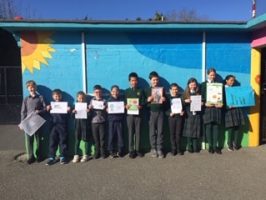
The committee includes teachers, the caretaker, and at least one student from each year. Students and staff volunteer each new school year, while any members from previous school years can remain on if they wish.
1

St Marys Woodside N.S.

St Marys Woodside N.S is located in Sandyford, Co Dublin.  The school has approximately 27 Teachers and 254 students. They achieved their second flag for Energy in May 2022. 

News

Find our what's been happening at Green-Schools!

PLEASE NOTE: ALL DATES BELOW ARE TO BE CONFIRMED. CHECK BACK IN THE LAST WEEK OF AUGUST FOR CONFIRMATION. Join us online as we take you through your Green-Schools theme …

Delighted to bring our Biodiversity Calendar to you to help you plan your year! Check back for your most up to date news!

The Green- Schools programme has partnered up with five organisations across Europe to pilot the Little Green Fingers project, an innovative educational program that integrates STEAM, environmental education, and design …

Partners

Sponsors

Our work is supported by our generous sponsors with gratitude.

Subscribe to our newsletter

Subscribe

* indicates required
  • Word or phrase

  • Area