Global Citizenship - Food and Biodiversity

This theme explores how growing and eating our own food impacts our personal health, and how it has knock-on impacts for local and foreign biodiversity.

In 2025/2026 schools working on the theme grew 44 different types of vegetables and fruits and used their harvest to try out over 40 delicious recipes!

Find out more about this theme, upcoming events and competitions, and theme resource clicking on the button below.

What is the connection between Food and Biodiversity?

The sun’s energy is the primary source of energy for all life on Earth. Energy changes form at each step in the chain. Humans and other organisms use energy to survive (grow, change, maintain health, move, and reproduce).

To heat our homes and schools we need an energy source. These energy sources can be categorised as renewable or non-renewable energy. Renewable energy is one that can be easily replenished while non-renewable is one that cannot. Examples of renewable energy include; solar, wind, geothermal, biomass and hydropower.

Fossil Fuels are non-renewable and include; oil, natural gas and coal. These are formed under intense pressure and heat over millions of years from the buried remains of plants and animals. Burning fossil fuels releases energy in the form of heat. In recent decades, humans have been burning more and more fossil fuels to meet the world’s energy demands. Burning fossil fuels contributes to acid rain, which is implicated in the loss of wildlife in lakes and rivers, the reduction of land fertility and the destruction of trees. Furthermore, by burning fossil fuels to release heat we are releasing carbon dioxide (CO2) into the atmosphere faster than plants can absorb it. CO2 is a major contributor to the greenhouse effect; as more fuels are burnt, the atmospheric concentration of CO2 increases, causing the average global temperature to rise.

Climate Change affects the distribution of climatic regions, sea level changes and ultimately, the planet’s ability to support human communities.

The good news is, there are simple steps we can take to reduce our energy consumption at home and in school. Many of which are simple low and no-cost actions that can be carried out to increase efficient use of energy and help save you money.

Facts & Figures

What You Can Do

Useful Links

We found that this theme in particular really interested the children. They were eager to get involved and enjoyed the hands on aspect of this theme. Working on the programme has encouraged us as a school to think bigger about how we can support children's learning and understanding of Global Environmental issues.

Primary Food & Bio school

Carysfort National School

Video Case Study of Carysfort National Schools’ work on the theme!

Resources

We have an extensive range of resources covering all themes.

Scéalta na hIthreach (logainmneacha)

Suite of resources for Féile Scéalta na hIthreach!

GSP Class Application Form Template

This template can be used by Green-Schools Committees to select the class that will be working on the Green-Schools project.

Crop Cards (bilingual)

Learn how to grow the 10 most common crops while on the food and biodiversity theme. Foghlaim conas na deich mbarr is coitianta a fhás agus sibh ar bun an téama bia agus bithéagsúlachta
Case Studies

We have an extensive range of resources covering all themes.
1

Scoil an Spioraid Naoimh Case Study

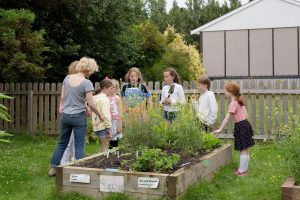
Scoil an Spioraid Naoimh is a primary school in Roxboro, Limerick with about 300 students and 22 teachers.
1

St. Vincent de Paul National School

St. Vincent de Paul (SVP) National School is a girls’ senior primary school in Dublin. There are 316 students from 2nd to 6th class and 20 teachers.

News

We have an extensive range of resources covering all themes.

Join the Daily Swaps Challenge! What? A week-long challenge where your Green-Schools Committee will organise and promote a school-wide campaign to make small daily swaps help save water and energy. …

To celebrate the launch of our brand-new Bookworm Journey, during Global Goals Week we’re inviting children to get creative and design a bookworm of their very own! The Bookworm Journey …

Sign up for a Regional Energy Workshop near you! Registrations are now open for the Regional Energy Workshops! Our Energy Workshops have returned for 2026! Similar to last year, we …

Partners

Sponsors

Our work is supported by our generous sponsors with gratitude.

Subscribe to our newsletter

Subscribe

* indicates required
  • Word or phrase

  • Area